How to Plan a Successful Hybrid Event: A Practical Corporate Guide
Published On 20-01-2026


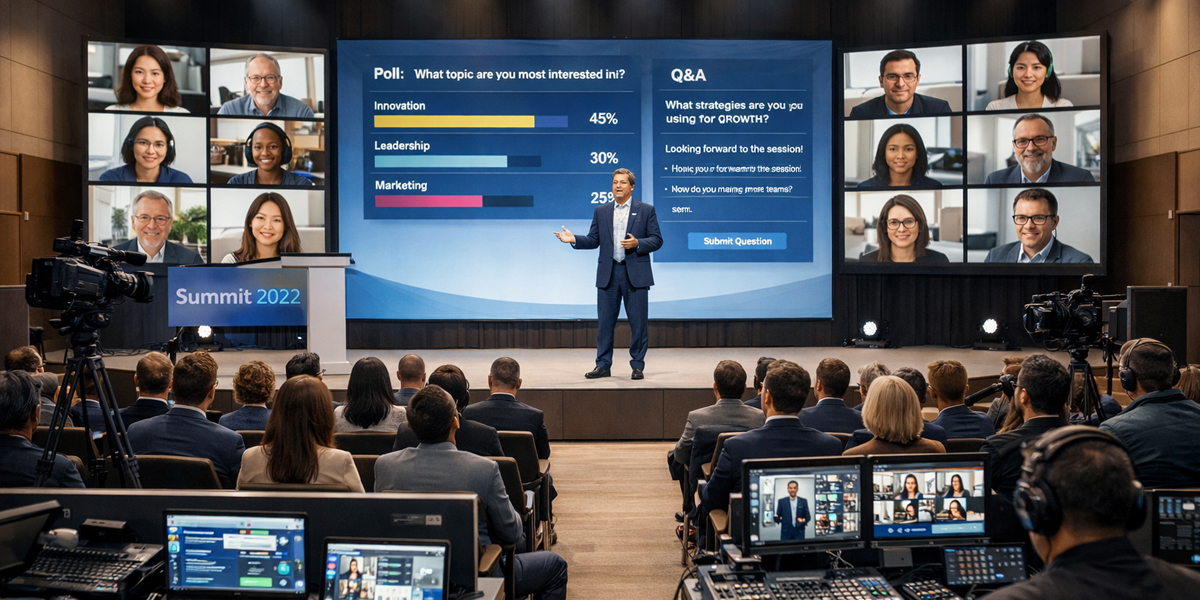
Hybrid events are now one of the most practical ways for organisations to connect with people spread across different locations while still keeping the energy of a physical gathering. They make it easier for audiences to join from anywhere and give planners the flexibility to reach more participants without complicating the experience. The real success of a hybrid event comes from how well it is prepared. It depends on understanding how the on-ground setup and the virtual environment can work together to create one unified experience.
At 24 Frames Digital, we work closely with clients to design hybrid experiences that are simple for speakers, smooth for viewers and stress free for internal teams. Over the years, we have put together a practical checklist that helps organisers prepare for important gatherings. This playbook captures those learnings in a way that is easy to follow and apply to different event formats.
- Begin with a strong event structure
- Who are your main audiences and where will they join from
- What parts of the event must be delivered live
- Which segments need a customised virtual experience
- What outcomes are expected after the even
- Assess your hybrid technology early
- Shape the content timeline
- Plan a solid production setup
- Bring partners together early
- Camera angles versus audience movement
- Power load and backup for all equipment
- Internet dedicated to stream output
- Moderation roles for virtual interactions
- Prepare speakers for a dual-audience format
- Conduct one complete technical rehearsal
- Keep a master checklist ready
Every corporate event planning should start with clarity. Before briefing partners or designing the stage, it helps to define the entire flow. A few guiding questions are useful.
A clear structure keeps all teams aligned and avoids confusion when new elements are added during planning.
A reliable technical foundation is the backbone of any hybrid event. Internet stability, audio quality, camera placement and platform integration must be planned in advance. When working with a specialist team, check if their hybrid event management services include redundancy solutions, streaming health checks and backstage communication tools.
Many disruptions occur because the basics are overlooked. Simple readiness checks, done ahead of time, prevent most last minute challenges.
Hybrid audiences pay attention in a different way than those sitting in the room, so the content needs to stay tight and well planned. You can include small polls or interactions for online viewers, smooth shifts between speakers, short highlight videos and brief recap slides for longer segments. When the flow is paced well, virtual attendees stay connected and feel involved in what is happening at the venue.
Production quality directly impacts audience experience. A single camera angle often falls short in capturing stage presence, expressions and audience reactions. A good hybrid setup usually includes multi-camera event production that covers wide shots, close ups and movement around the space. It gives the virtual viewer a broadcast-style experience.
Test lighting and audio during rehearsals. Minor adjustments create a noticeable difference in how the event appears on screen.
Venues, vendors and internal teams must work with the same information from the start. If you are partnering with a team that provides corporate hybrid event solutions, ask them to prepare a shared run-sheet that maps responsibilities and dependencies. This reduces on-ground confusion and keeps the event flow smooth.
Important checks that planners often overlook:
Many speakers feel confident when they are on stage, but speaking to a camera can be a little different. A short orientation can make a big difference. It helps them understand how to pace their talk, when to pause and how to keep online viewers engaged. Offer easy, practical tips on using the mic, maintaining good posture and moving smoothly from one slide to the next.
This step plays a key role in how smoothly the hybrid event will run. A complete rehearsal with all cues, transitions and technical checks often brings out issues that quick run-throughs may miss. It is the ideal time to test videos, audio, overlays, switching and any delay in the stream. When the entire team treats this rehearsal like the actual event, it becomes easier to spot and fix any weak areas well in advance.
In the last week before the event, having one clear checklist can make everything easier and keep the team calm. It should cover the script and cue sheet, speaker timings, all graphics and overlays, backup devices, recording needs and who will handle moderation. When these details are organised in one place, the team can stay focused and avoid last minute mix ups.
Final thoughts
A flawless hybrid event is the result of clear structure, strong technology and a steady production partner. This corporate event planning guide aims to help organisers plan with confidence and predictability. With careful coordination and early checks, hybrid experiences can feel effortless for both on-ground participants and virtual audiences.
At 24 Frames Digital, we continue to support clients with planning, streaming and production expertise. If you are exploring new ways to enhance your next gathering, our team is ready to help you create a hybrid event that is engaging, reliable and built for high impact.